THE SIGNAL
A pattern of pulses
Pressing a button sends a stream of infrared pulses. The pattern is unique to that button, and the TV's receiver recognises it.
Try the camera test
HOW THE REMOTE TALKS
940 nm just past red
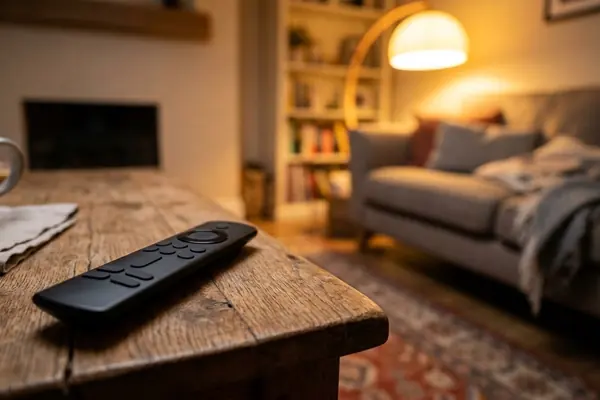
AI-generated image, not a photograph of a real person or place.
Every button press is a burst of invisible light.
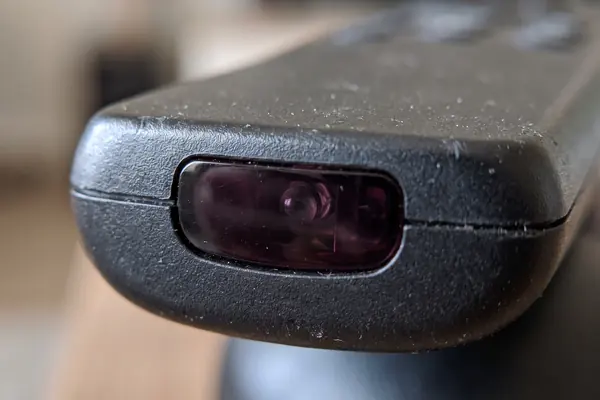
Most home remote controls flash an infrared LED in a pattern unique to each button. Your eyes miss it completely, but the sensor in many digital and phone cameras does not.
THE SHORT ANSWER
Most home remotes use infrared light.
Garage and gate openers usually use radio.
THE SIGNAL
Pressing a button sends a stream of infrared pulses. The pattern is unique to that button, and the TV's receiver recognises it.
Try the camera testTHE LED
NASA says a typical TV remote uses infrared at a wavelength around 940 nanometres, just beyond the red end of what we can see.
Place the lightTHE EYE
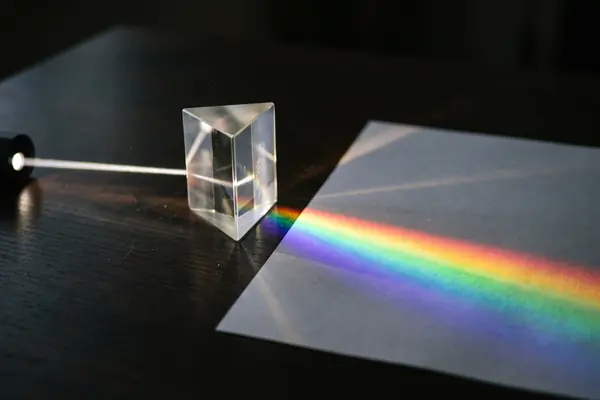
The human eye typically detects light from 380 to 700 nanometres. Silicon camera sensors can respond out to about 1,000.
See the numbers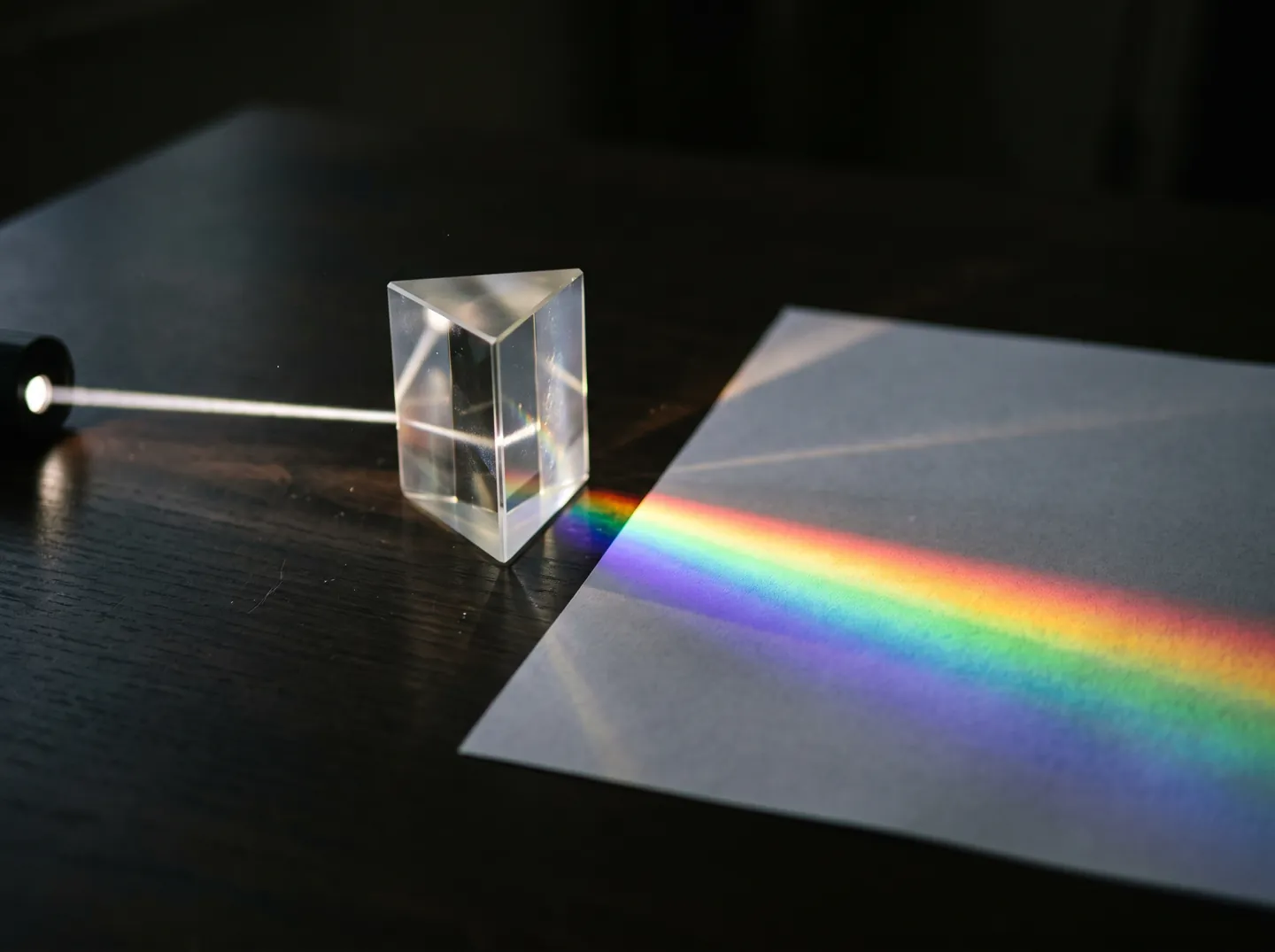
THE CAMERA TEST
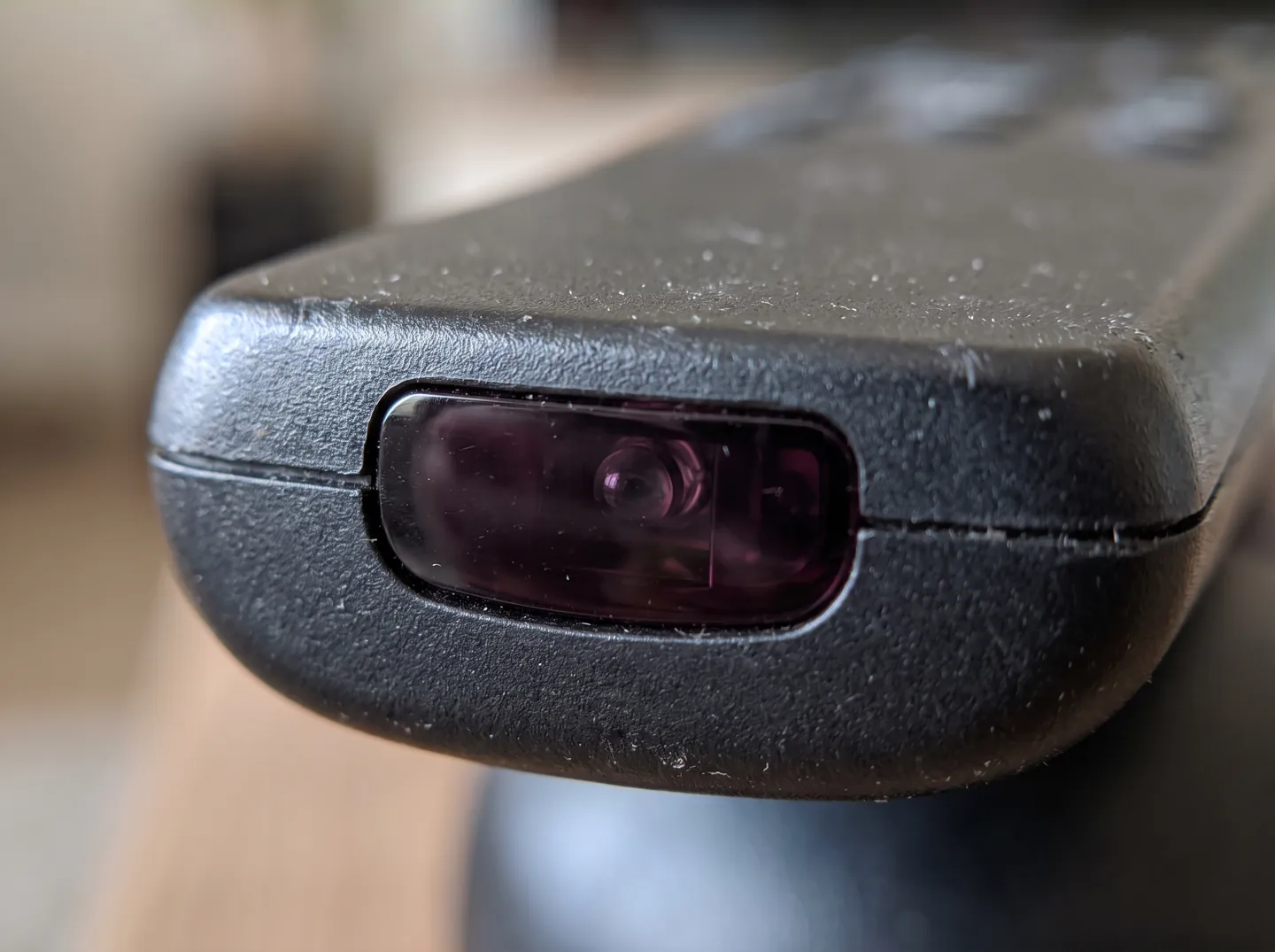
Because many camera sensors pick up near infrared, a phone can show you whether a remote is sending anything at all.
Use the phone's camera app, in a dim room if you can, and point the lens at the end of the remote.
Watch the screen. A working infrared remote usually shows a flickering light at its tip, often purple.
Digital cameras usually have filters that block infrared. Some block more than others, so try the phone's other camera.
Infrared needs a clear path to the receiver, though a mirror can bounce it. A cabinet door can stop it.
TWO NUMBERS WORTH KNOWING
The colour of the light,
and how fast it is switched on and off.
940 nm
Typical TV remote infrared
NASA puts a typical TV remote at around 940 nanometres, beyond the eye's usual 380 to 700 nm. Remotes mostly use about 870 nm or 930 to 950 nm.
WAVELENGTH · NASA
38 kHz
Most common carrier frequency
The light is switched on and off thousands of times a second. Carriers typically fall between 33 and 40 kHz; the most widely used protocol specifies 38 kHz.
CARRIER · CONSUMER IR
The 930 to 950 nm band is preferred because water in the air blocks sunlight at those wavelengths, so a receiver is less easily dazzled by daylight.
WHERE DOES IT SIT?
Pick a light source to see where its wavelength sits. The bar shows how far it lies past the light our eyes can detect.
1 micron (µm) is 1,000 nanometres (nm). Wavelengths from NASA Science's guides to the electromagnetic spectrum.
WHY CAMERAS SEE IT
Unlike the eye, sensors made of silicon, including CCD and CMOS camera sensors, respond into the near infrared, out to about 1,000 nm. Cameras usually carry an infrared-blocking filter so photos look natural, but enough remote-control light often gets through to show up as a glow.
Before infrared, TV remotes from 1956 to 1977 used ultrasonic tones; pressing a button struck a bar that clicked, which is why remotes were nicknamed clickers. Infrared receivers today contain a photodiode, a gain control and a demodulator that pulls the code out of the flickering light.
In conversation
The camera's sensor picks up near-infrared light the eye cannot see and shows it as a visible colour. Seen through a digital camera, the LED often appears to pulse purple.
Not an infrared one. It uses light, so it needs a line of sight to the receiver, although the signal can bounce off a mirror like any other light.
The signal flickers at a fixed carrier frequency, typically 33 to 40 kHz, and many remotes use 930 to 950 nm, where water in the air blocks sunlight, making receivers less easily dazzled.
Infrared remote codes are mostly not standardised. Different makers use different protocols, which is why universal remotes store or learn many codes.
William Herschel in 1800. He put thermometers in each colour of a spectrum and found the temperature was higher still just beyond the red end.
Each figure on this page comes from the sources below.
ABOUT THIS NAME
cameraremotecontrol.com is part of the DoodleSale portfolio. It isn't in an auction right now, but you can ask about leasing it.